
Kyle Cave
Staff Writer
2026 marks the 100th anniversary of Black History Month. ESU celebrated the 100-year milestone with a read-in of students favorite poetry from influential black figures that they feel personally have impacted them.
The event was organized by the executive director of The Frederick Douglass Institute, Laura Kieselbach who is also an English professor at ESU. She organized this event with ESU English professor Artress B. White. White is the faculty adviser of Sigma Tau Delta, the English honor society, and the Fredrick Douglass Institute.
Kieselbach told The Courier she organized this event last year, but only to celebrate the birthday of Fredrick Douglass. This year, Kieselbach says she wanted to make it more inclusive to celebrate all black figures across history.
Professor White told The Courier that this is the second year that she and Kieselbach worked together on this event. White says that she also wanted to include organizations with this event. Some that were involved in the event included the Women of Color Initiative, the Men of Color Alliance and members of the Frederick Douglass Debate Team.
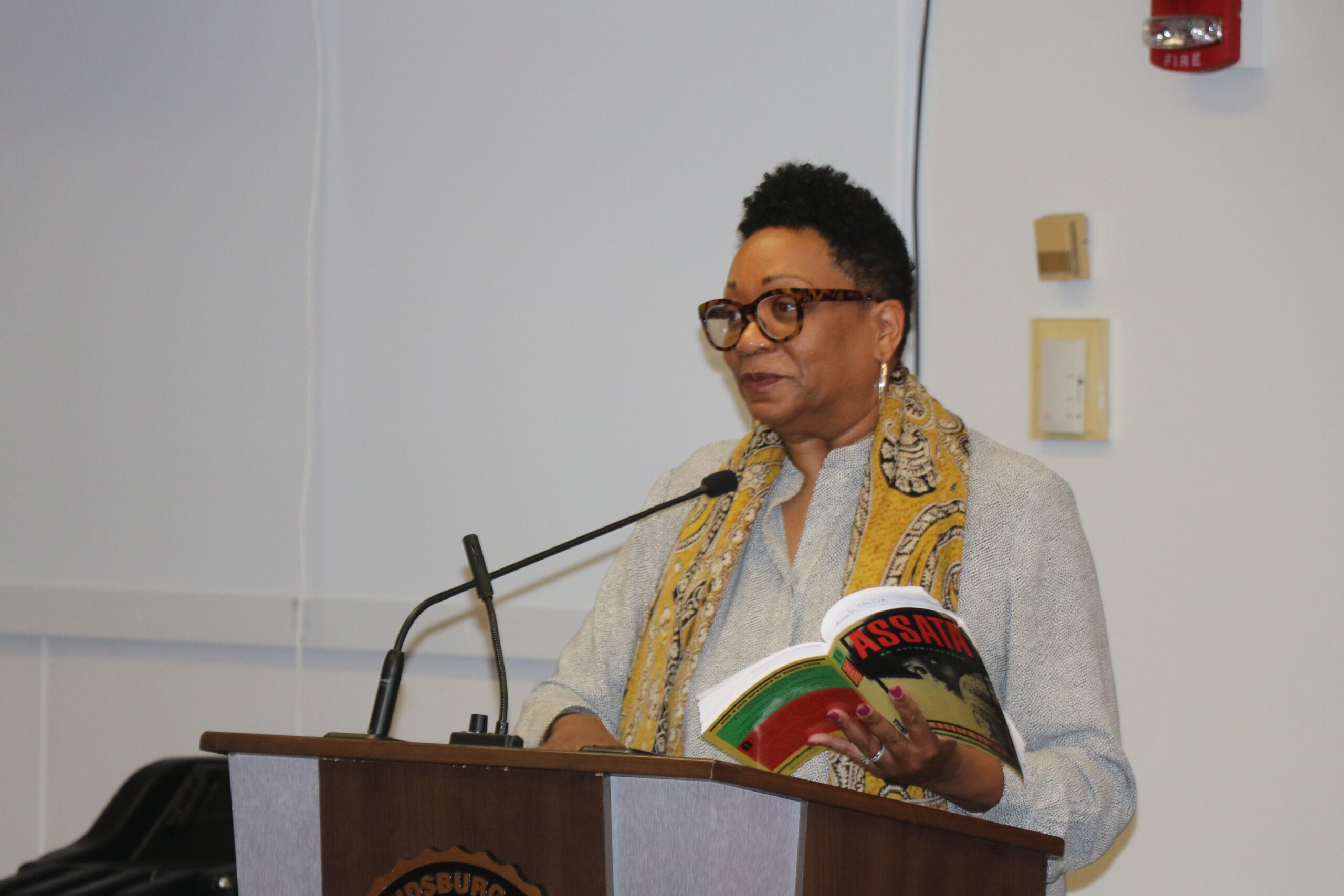
The event took place at Rosenkrans and had several speakers ranging from students to professors. Some of the influential poets that students read from included Langston Hughes, Dudley Randall and Assata Shakur. A number of the poems that were read were written by the students.
The Courier interviewed Priana Figuereo, a student at ESU that spoke at the event. For the event, Figuereo read lyrics from the Michael Jackson song “They Don’t Care About Us.” Figuereo said before this event she had never spoken in front of people, and how it was “nerve-racking” and a “new experience.”

“Music has the power to change lives,” said Figuereo when asked why she chose to read Jackson’s song lyrics. She also said that Jackson’s music is a “powerful tool to change the world.”
To conclude the event, Kieselbach and White read poetry they picked for themselves. Kieselbach read the Langston Hughes poem “Mother to Son” and White read a portion of Assata Shakur’s autobiography.